Tribal Marine Stewards Network Member-Tribes recently participated in the 2026 Eastern Pacific Kelp Congress (EPaK), a coast-wide convening of over 275 participants from across society, including representation from Tribes, governmental agencies, industries, NGOs partners, academia, and others working to protect and restore kelp forests along the Pacific coast.
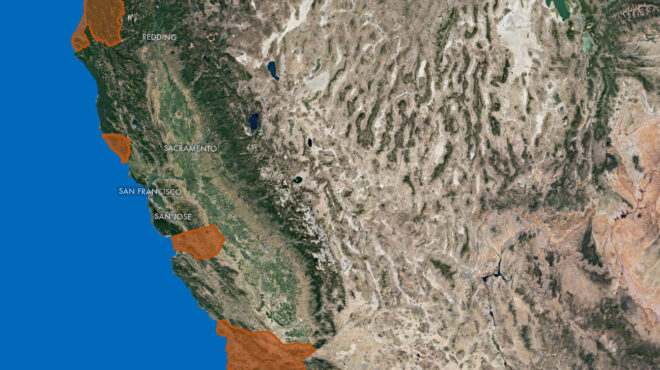
This year’s EPaK Congress focused on building connections and partnerships between participant organizations from Alaska to Baja California. Participants spent time over two days sharing knowledge and practices for assessing current kelp forest health and practical restoration strategies, and identifying “ecological, social, cultural and governance” challenges to kelp forest restoration.
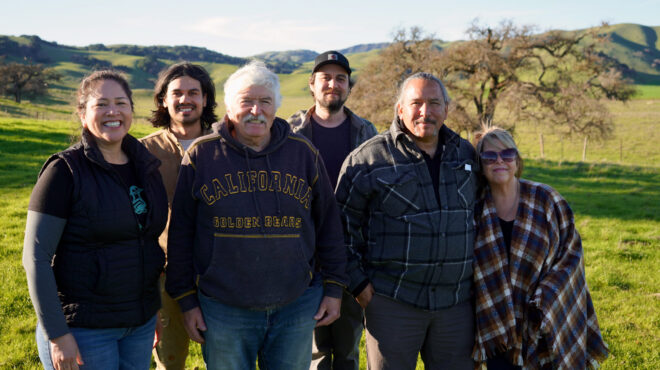
Nina Hapner, Managing Director of Environmental Planning and Natural Resources at Kashia Band of Pomo Indians (KBPI), spoke to highlight the critical role that the Tribal Marine Stewards Network plays in ecosystem restoration and protection. She lifted up the role that Indigenous communities play in long-term stewardship of their coastal homelands, priming the EPaK to hear from other Tribal staff about their work to advance landscape-scale restoration efforts.
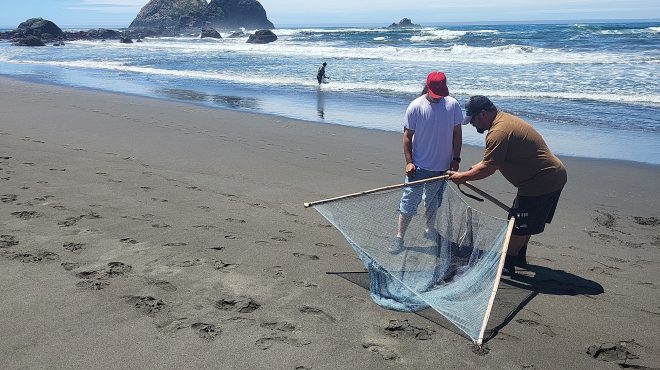
Dr. Dan Swezey, Director for Oceans and Aquaculture with KBPI, shared results from ongoing kelp and abalone restoration efforts led by Kashia in the Tribe’s territory, highlighting Kashia leadership in efforts that have removed 50 tons of purple urchin from a focal restoration site. Dr. Swezey also discussed the Tribe’s long term abalone restoration plans, and the connection between healthy abalone populations and kelp forests, emphasizing how recovery of both must go hand-in-hand. Dr. Swezey updated on efforts highlighting that The Tribe has trained 6 staff and Tribal members as American Academy of Under Water Sciences (AAUS) scientific divers, who are contributing to this project. In partnership with external groups, Kashia staff co-leads kelp monitoring and restoration at sites that are sacred to the Tribe such as Tule qha le yo (Shell Beach, CA) and Metini (Fort Ross). Re-balancing sea urchin populations, which eat bull kelp, is ongoing and expanding as part of this work, through partnerships with commercial divers, universities including UC Davis and UC Berkeley, the Greater Farallones Association and regional marine science centers including the Noyo Center for Marine Science.
Tolowa Dee-ni’ Nation (TDN) Marine Division Manager Rosa Laucci discussed how, due to colonization and climate change, TDN has witnessed ecological changes within their ancestral territory, including the decline of kelp forests and availability of seaweeds. Seaweed is a traditional food and kelp forests are nurseries for a multitude of other traditional foods, so this decline has a direct effect on the health of the Tolowa Dee-ni’. As first stewards of the land and sea since time immemorial, they have inherent rights and responsibilities to maintain balance of those resources and ensure they are available for future generations to come.
The Ghvtlh-k’vsh Shu’-srnelh-‘i~ project will provide TDN with the tools necessary to develop tribal kelp forest monitoring, kelp restoration best practices, establish in-situ farming of keystone seaweed species, and assist tribal youth in pursuing further education in kelp forest ecology. All of this will be achieved alongside partners with the relevant experience to train the Nation on these new protocols and this will ensure that kelps and seaweeds come back into balance through traditional stewardship of the coast.
Check out their documentary on this project at: https://youtu.be/85GwslAkd84?si=Ij2SXmdFnkygFSb1
Are you interested in finding out more about the Eastern Pacific Kelp Alliance? Visit their website here: https://bullkelp.info/epak, where you can also find recordings and outcomes from this year’s Eastern Pacific Kelp Congress!